Long Tail Keywords?
In this post we’ll look at long tail keywords, what they are and how to use them.
What Are Long Tail Keywords
Keywords are the absolute bedrock of SEO. Sure there are a lot of things that can have an effect on how well a website ranks, but if keywords aren’t at the foundation of those decisions then you’re always going to struggle to get a website to do what you want it to.
But not all keywords are created equal, and which should you be targeting? A large part of that answer should be based around human behaviour, as much as it is data driven, and if you’ve done any research at all you will have undoubtedly come across the term ‘long tail keywords’, but what are they, how do you find them and how do you use them?
So, What are Long Tail Keywords?
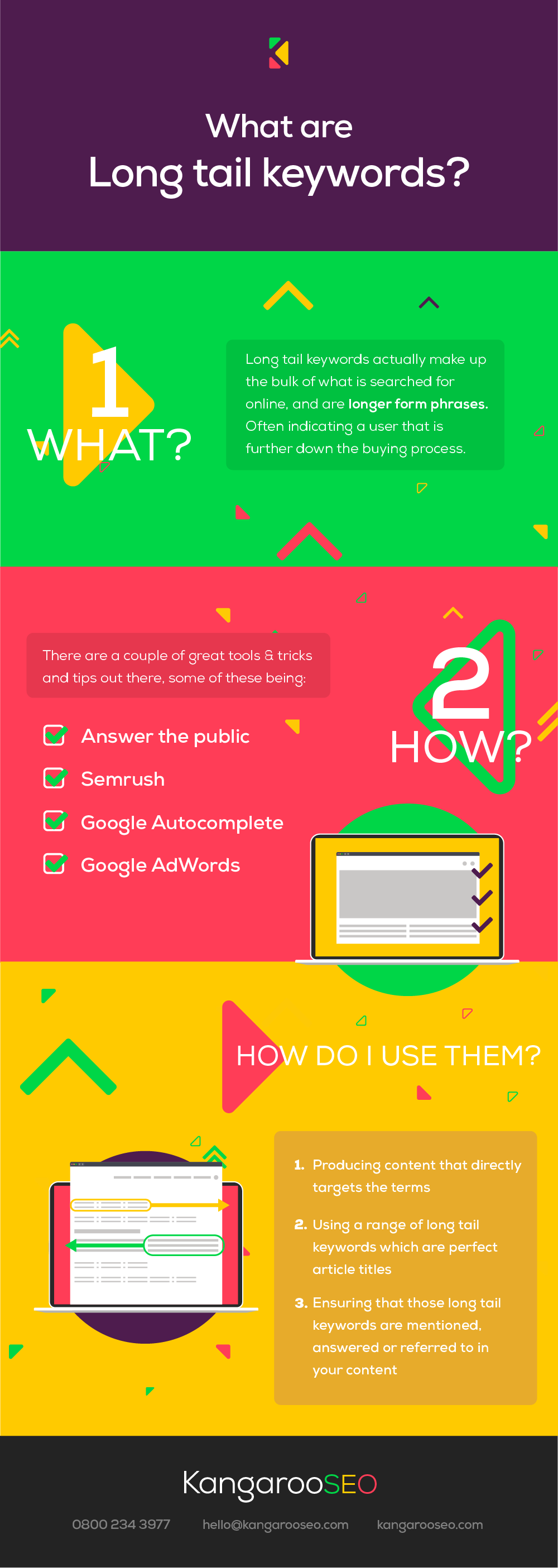
Long tail keywords actually make up the bulk of what is searched for online, and are longer form phrases that often indicate a user further down the buying process.
They get their name due to number of searches that are carried out, and what this appears like on a graph, rather than the fact that usually long tail keywords have more words in them. We can see from the graph below that while simple, investigatory based searches get the most search volume, people actually carry out more searches for long tail keywords. Confused? Let’s look at an example.
- ‘Ford Fiesta’ gets around 135k searches a month. But it is a broad term, and there are any number of reasons why a user may search for this particular term. They might not even be looking to buy one, but are looking for a specific stat or piece of information.
- ‘Ford Fiesta ST’ gets around 27.1k searches a month. Simply by narrowing the search query by assign a model we have lowered the number of searches per month. Someone searching for this is looking to find information about this specific car, which demonstrates a bit more intent. However, it is still safe to assume that user is quite far from making a purchase.
- ‘2015 ford fiesta ST for sale’ gets around 10 searches per month. But, we can almost say for certain that the user is looking to make a purchase.
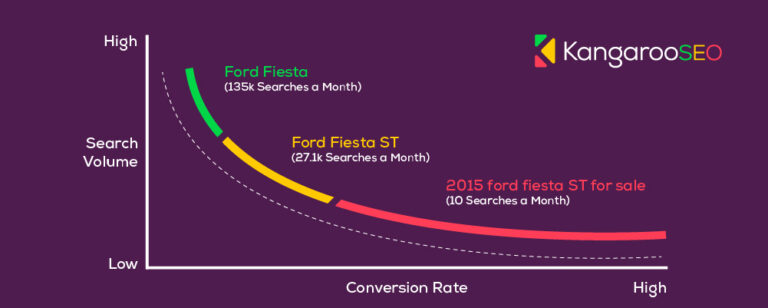
The long red section is made up of long tail keywords. Less search volume per search, but more searches of this nature are carried out.
In the first instance a lot of business think they want to rank for the first search term as it is the highest volume. But this term is incredibly competitive and a vast amount of work would be needed to even break onto the first page. And even then by looking at user behaviour we can see that they may not even sell a car off the back of all their work. In reality, most businesses should want to rank for the final term. Much less competitive, but the person searching for that term has a serious intention of making a purchase.
How to Find Long Tail Keywords
Now we have established what a long tail keyword is, we can start to talk about how to find them. There are a couple of great tools out there, and also some tricks and tips:
Tools
Answer the Public – this is a great tool not just for long tail keywords, but content generation in general. Simply type in a subject and answer the public will fire back out questions, comparisons and prepositions surrounding your keyword. The results themselves can be long tail keywords, or can at least start you down the path of find them.
Semrush – Semrush’s keyword tool is fantastic. Similar to Answer the Public, simply type in a keyword and it will present data around similar terms, broadly matched terms and questions based on your keyword. Along with this it will return the top organic listings so you can do some digging into who already ranks for your target term, and so you can get an idea of what you need to do to claim to top spots.
Google Autocomplete – in its constant effort to provide a better experience to its users, Google’s autocomplete is constantly evolving and getting more and more accurate. It will often autocomplete your search based off the most often searched for terms. Try simply typing your target keyword and not pressing enter to see what Google suggests. You can also try prepositioning it with interrogative words (what, why, when, how etc.) to give it a prompt.
Google AdWords – if you have an AdWords campaign set up then you can often find some long tail keywords in the search terms used to trigger your ads, depending on how you have your trigger keywords set up. Simply go to your AdWords dashboard > keywords > search terms and have a browse!
How To Use Long Tail Keywords
Once you have a list of long tail keywords established there are a couple of ways of using them in your campaign to start generating a bit more traffic. One of the most effective ways is to produce content which directly targets the term. From the research carried out in previous steps you should have a range of long tail keywords which are perfect article titles or sub-headings, and so the basis of an article has already been formed. It is then simply a case of ensuring that those long tail keywords are mentioned, answered or referred to in your content.
Contact our West Yorkshire based team on 0800 234 3977
Need Help Finding Long Tail Keywords? What Else Can Kangaroo SEO Do?