Mastering the Basics of On-Page SEO
On-page SEO involves optimising both the frontend and backend aspects of your website to improve its ranking on search engines and attract new visitors to your site.
On-page SEO plays a crucial role in the success of your SEO campaign by allowing search engines to easily navigate and index your website’s pages, as well as appealing to visitors who come across it.
There are several factors to consider that can greatly improve your website’s visibility. Let’s explore how you can effectively grasp the fundamentals of on-page SEO.
Keyword Research
Effective SEO strategies are built upon a solid foundation of keyword research. This crucial step allows you to gain insights into what users are searching for and why, the frequency of specific search terms, the level of competition for those terms, and even discover untapped opportunities to create valuable content that fulfils user needs.
There are various types of keywords and understanding them helps in targeting them effectively.
- Short-Tail Keywords: Broad terms such as “shoes,” that have a high search volume but also face tough competition.
- Long-Tail Keywords: Specific phrases that have a lower search volume but higher conversion rates, such as “top-rated running shoes for individuals with flat feet”.
- Branded Keywords: Incorporate the names of well-known brands like “Nike running shoes”.
- Non-Branded Keywords: Common phrases unrelated to a specific brand (e.g., “running shoes that provide comfort”).
You can utilise various tools like Google Keyword Planner, Ahrefs, SEMrush, and AnswerThePublic to discover the most suitable keywords. These tools offer valuable information on keyword possibilities, competition, and trends, enabling you to develop a focused and successful SEO plan.
Heading Tag Optimisation
Heading tags are crucial for search engines to understand the structure and organisation of your content. They not only stress the importance and context of each section but also allow you to highlight important keywords. By doing so, they enhance the visibility and impact of your content.
Additionally, heading tags contribute to a better user experience by improving readability. They divide the content into easily digestible sections, making it easier for users to find the information they need and encouraging them to read further with clear and descriptive headings.
Heading tags range from 1 to 6. The H1 tag serves as the main title of the page, highlighting the primary topic. Remember, there should only be one H1 tag per page, and it should contain the main keyword. To prevent your pages from competing for search engine ranking, make sure each H1 tag is unique.
On the other hand, H2 to H6 tags act as subheadings that establish a hierarchy within the content. H2 represents major sections, while H6 signifies minor subsections. Use secondary keywords in these subheadings to encompass related terms and variations.
Each heading should accurately describe the section it introduces and should be engaging to entice readers to continue. Stick to using H2 for major sections, H3 for subsections, and so forth to maintain a clear and consistent structure in your content. For instance, if your web page is about “Top 10 SEO Tips for 2024” then your Heading tags may go something like:
<h1>Top 10 SEO Tips for 2024 </h1>
<h2>1. Conduct Thorough Keyword Research </h2>
<h2>2. Optimise Your Title Tags </h2>
Title Tag Optimisation
Title tags are essential clickable headlines that show up in search engine results pages (SERPs). They are vital for helping search engines comprehend your page’s content and can impact whether users decide to click on your link.
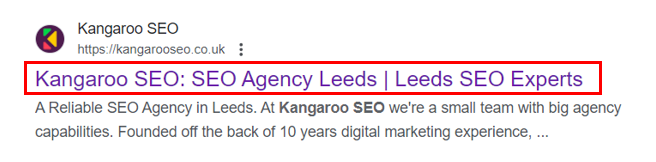
By implementing proven strategies and consistently improving your methods, you have the ability to create optimised title tags that boost your website’s visibility, attract a higher number of clicks, and enhance your overall SEO performance.
Best practices include:
- Making sure to include the main keyword in the title tag.
- Position the keyword at the start of the title for maximum visibility and impact.
- Limit your title tags to 50-60 characters to ensure full display in SERPs.
- Avoid lengthy titles that may be truncated, leading to lower CTR.
- Use compelling language with action words to create urgency or curiosity.
- Give each page a unique title tag to prevent keyword overlap and enhance search result diversity.
- Add your brand name at the end of the title tag for brand recognition and credibility.
- Maintain consistent branding across all title tags on your site.
- Incorporate keywords naturally into the title and steer clear of keyword stuffing.
- Prioritise readability and make the title appealing to readers.
Meta Description Optimisation
Optimising meta descriptions is just as important as optimising title tags when it comes to on-page SEO. Meta descriptions are displayed below the title tag in search engine results pages, offering a brief overview of the page’s content.
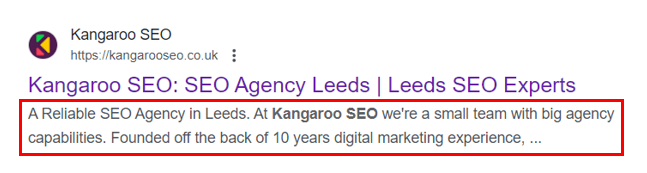
Crafting a compelling meta description can boost the chances of users visiting your site. Even though it doesn’t directly impact rankings, well-optimised meta descriptions can enhance user engagement metrics, ultimately benefiting your SEO efforts.
When creating meta descriptions, it’s important to keep them between 150-160 characters to ensure they show up fully in search results. Include primary keywords naturally, along with synonyms and related phrases, to help cover a wider range of search queries. Using action verbs and engaging language can help to attract users – emphasise the benefits or unique features of the content and add a call to action to prompt users to take action!
Remember, each page should have a distinct meta description that matches its content because having duplicate descriptions can result in keyword cannibalization and decreased effectiveness.
Internal Linking
Internal linking is an essential aspect of on-page SEO, where you link one page of your website to another. By implementing this approach, you can assist search engines in finding and organising your web pages, transfer authority between pages, and help search engines understand the context and relevance of your content.
When it comes to internal linking, it’s important to follow some best practices.
Make sure to use anchor text that accurately describes the content of the linked page. This will help users understand what they can expect when they click on the link. Avoid using generic terms like “click here” as they don’t provide any context.
Another tip is to prioritise linking to high-value pages such as cornerstone content, product pages, or conversion-focused pages. These pages are usually the most important ones on your website, so it’s crucial to give them internal links.
Don’t limit your internal links to just the homepage or main categories. Make sure to include links to deeper pages as well. This will help users navigate through your website and discover more relevant content.
However, be cautious not to overlink. Too many links can dilute their value and overwhelm users. It’s important to strike a balance and only include relevant and necessary internal links.
Image Optimisation
Enhancing images for SEO purposes offers a range of advantages. By optimising images, you can speed up webpage loading times, a crucial element for search engine rankings, and deliver a smoother user experience with faster-loading visuals.
Additionally, optimised images can enhance accessibility for visually impaired individuals and boost visibility in image search results, ultimately attracting more traffic to your site.
When it comes to optimising images, there are several factors to take into account. Ensure that you select the appropriate file format, such as JPEG, PNG, or GIF.
Utilise tools like Adobe Photoshop, Squoosh, or online compressors to decrease file size while maintaining quality, resulting in faster page load speeds. Implement responsive images to cater to different screen sizes on various devices.
Instead of generic names, opt for descriptive, keyword-rich filenames, using hyphens to separate words. Create alt text that is both descriptive and includes relevant keywords, but be cautious of keyword stuffing and make sure it provides context for visually impaired users who rely on screen readers.
Why Choose Kangaroo?
SEO is constantly changing in digital marketing, which can be difficult to keep up with. That’s why we recommend consulting with a team of SEO experts who can guide you through the process.
Kangaroo SEO was founded based on extensive experience in digital marketing. We identified a need for individuals who require the expertise of a large agency, minus the unnecessary extras that often come with it. Reach out to Kangaroo SEO now to discover how we can improve your website.