The 3 Most Useful Schema Types For Ecommerce SEO
If you’re an e-commerce business and you’re not using schema markup, you’re missing out on huge SEO opportunities.
If you’re an e-commerce business and you’re not using schema markup, you’re missing out on huge SEO opportunities. We’ve put together this guide to help you understand what schema markup is, how to implement it, and the 3 most useful schema types for e-commerce sites.
How to implement structured data for SEO
What is schema markup?
Schema markup is a form of structured data that helps search engines understand and display certain types of content in the SERP. By making your listing stand out in search results, schema markup can help increase your click-through rates.
All of the available schema types can be found on schema.org, a digital library of structured data types supported by search engines.
Structured data can be used to highlight a vast range of content including events, products, people, recipes, reviews and many more.

How does schema markup and structured data support E-Commerce SEO efforts?
Schema markup is particularly efficient in improving e-commerce SEO performance. Structured data helps search engines process content on your site and display it more effectively in the SERP, as a rich snippet.
This means your content will be more visible, will stand out from the competition, and you can offer your customers a better user-experience by serving them with the information they need at the earliest stage possible.
Although schema markup was invented for users, the positive impact of structured data on SEO performance cannot be underestimated. Studies have recorded increases in CTR from 30% up to 677% thanks to the implementation of schema markup on the key pages.
What’s the easiest way to implement schema markup on an E-Commerce site?
If you aren’t able to write the code yourself, fear not as there are many helpful (and free!) tools available. For example code generators like Google’s Structured Data Markup Helper allow you to copy and paste the generated JSON script into the HTML of the target page.
If you use an out-of-the box CMS or e-commerce platform, many of these implement some product schema as standard, so it’s always good to check if this something that is available to you.
Development teams can also help to scale up implementation across thousands of products if operating at an enterprise level. A common method to achieve this is setting schema markup guidelines at a page template level or by page type.
How to test schema markup
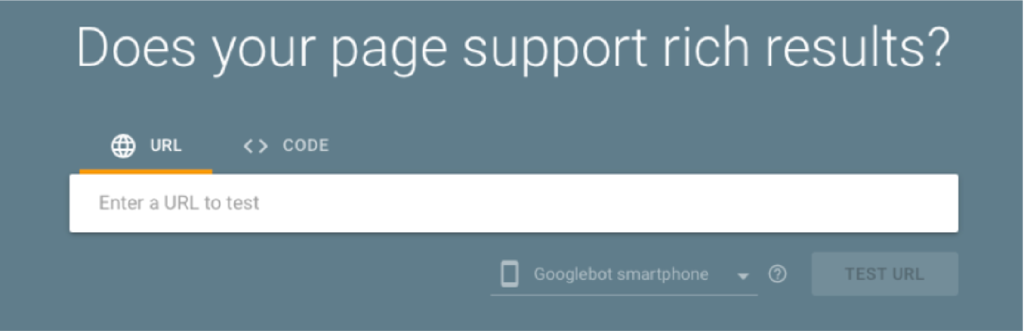
As soon as you start implementing structured data, you will need to test it to ensure it is valid and free from errors. There are some brilliant free tools that you can use to test your schema markup.
Google’s Rich Result Testing Tool is a great way to see which results can be generated from your target page. The tool also highlights any errors and makes suggestions to improve your structured data.
Google’s Rich Result Testing Tool
Another great aspect of this product is that you’re able to view schema markup on competitor sites by simply entering their URL. This can be a great source of inspiration to help identify what types of structured data could be used on your pages as well as assessing the competition’s implementation.
Once you’ve ensured your code is valid and error-free, you should keep a close eye on the SERPs to see if your content is being displayed as rich snippets. Regularly checking Google’s search results will also help you understand what kind of content the algorithm is identifying as most relevant to your target queries.
These manual checks can be automated with reporting and tracking tools like SEMRush and Ahrefs. You can upload lists of target keywords to track, and the tools will highlight any SERP features that are being displayed by the search engine. Google regularly tweaks how it displays rich snippets, so its best practice to track your visibility in the SERP features on an ongoing basis.
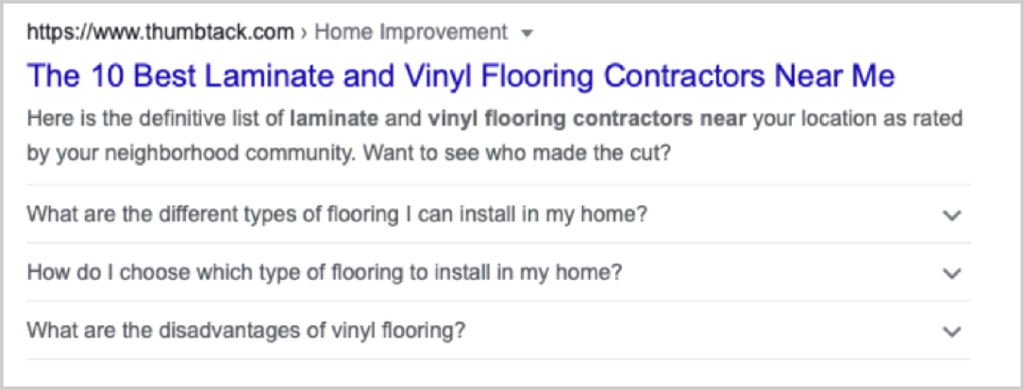
Most useful types of Schema Markup to implement for SEO
There are hundreds of available structured data types to choose from, but below we’ve listed the top three we think every e-commerce site should be using as standard.
FAQ Schema
The FAQ, or frequently asked questions, schema markup allows you to highlight a set of questions and answers, to be displayed under your search result in the SERP.
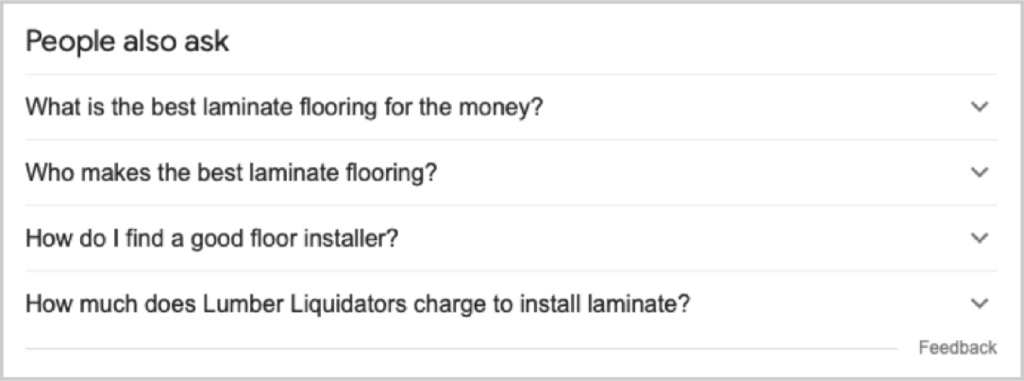
If your e-commerce site has question and answer based content, this is a great way to make it more visible to users. For example you can share information on delivery times, payment options, warranty length etc..
The FAQpage schema can also help your site appear in the ‘People Also Asked’ section of Google.
A great way to use this type of schema markup to your advantage is to find questions people are asking and answer directly in one or two sentences.
Being displayed as a rich result for questions is also a great way to target long tail keywords, bringing in an additional traffic source. And like most forms of rich snippets, FAQ snippets will show on both desktop and mobile.
According to Neil Patel, the FAQ page schema is one of the least used forms of structured data, so if you want to get ahead of the competition, this is a great technique.
Product Review schema
The Review data structure allows you to display ‘star’ snippets and customer reviews in search results. This is especially relevant for e-commerce sites.
As shoppers want to see, compare and research before they buy, making this information visible to potential customers will drastically improve your click through rates. It will also help your product stand out in the SERP and build trust with the searchers.
As well as ratings and reviews, the price schema type allows you to add price ranges to your rich results. If your prices are competitive within your market, the price schema is a great way to help consumers in their purchasing decision.

Whereas the price ranges can be added directly into the price schema, in order for reviews to be marked up, they must be displayed on the landing page in full in order for them to appear in the rich result.
Product Availability schema
The third essential schema type for e-commerce sites is product availability. As a consumer, there’s nothing more frustrating than clicking through to a page where the item displayed in the SERP is out of stock. This situation can also contribute to high bounce rates as most users will leave the page immediately.

To avoid bad user experience and ‘soft bounces’, you can highlight stock availability up front in the SERP. The structured data allows you to indicate stock levels, highlighting if something is ‘InStock’ or flagging if you are sold out. This can help protect rankings if a product goes ‘OutOfStock’ as it will avoid unnecessary clicks and frustrated potential customers.

As this schema type is dynamic, you will need to add the code manually following guidance from schema.org. Although it is slightly more complex than the other schema styles, it is well worth it for the improved customer experience and conversion uplift.
Schema markup is one of the most powerful SEO tools for E-Commerce sites, and if implemented correctly, it can drastically increase click through rates and conversion rates. If you do need any help with identifying, implementing or tracking your schema markup opportunities, get in touch and we’d be happy to help you out.
Contact our West Yorkshire based team on 0800 234 3977
Struggling to Get Your Site Ranking? Get in Touch. Need Help Boosting Your Authority? Read on...